By T. Lovett
This post contains affiliate links. If you buy through them, I may earn a small commission at no extra cost to you.
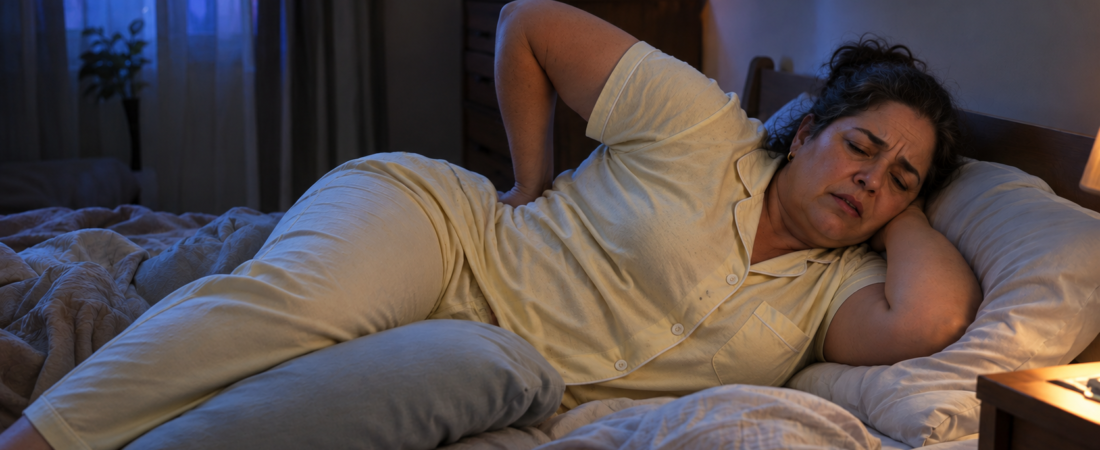
If you live with chronic pain, you probably know this cycle. You hurt, so you can’t sleep. You don’t sleep, so you hurt more the next day.
It’s not in your head, and it’s not just you. Pain and sleep are closely tied together. The good news is that small changes can help, and a few bigger ones can help even more.
Why Pain and Sleep Feed Each Other
Doctors used to think poor sleep was just a side effect of pain. Now researchers see it as a two-way street. Pain makes it hard to sleep, and poor sleep makes the body more sensitive to pain. Some studies suggest bad sleep may actually predict pain more strongly than the other way around. (source)
With fibromyalgia, the link is even stronger. Many people with fibro get less deep sleep, which is the kind that helps the body rest and repair. They might sleep all night and still wake up feeling like they never slept. In studies, healthy people who were kept from deep sleep started having fibro-like aches, tenderness and fatigue. (source)

The hopeful part: studies have also found that when sleep gets better, pain and fatigue often get better too. So working on sleep is worth it.
Small Changes You Can Start Tonight
These don’t cost anything. Try one or two at a time instead of all at once.
- Keep the same bedtime and wake time, even on weekends. Your body likes a routine.
- Cut back on caffeine and alcohol in the evening. Both can break up your sleep.
- Keep naps short. A long nap can make it harder to fall asleep at night.
- Make your room cool, dark and quiet. Turn off the TV and put the phone down a little before bed.
- Wind down on purpose. Deep breathing, gentle stretching, prayer or calming music can help your body relax.
- Try a sleep diary. Write down when you sleep, how you feel and how bad your pain is. It helps you see patterns, and it’s useful to bring to your doctor.
3 Bigger Investments Worth Thinking About
If you’ve tried the basics and still struggle, your bed setup might be part of the problem. These cost more, so take your time and choose what fits your body and your budget.
I’m not just listing these. I live with pain too, and I have all three: an adjustable bed, a supportive mattress and a lift recliner. They’ve done me very well. Yes, they can be a little costly, but for me they’ve been worth it. I can rest better, and getting up on hard days isn’t such a struggle.
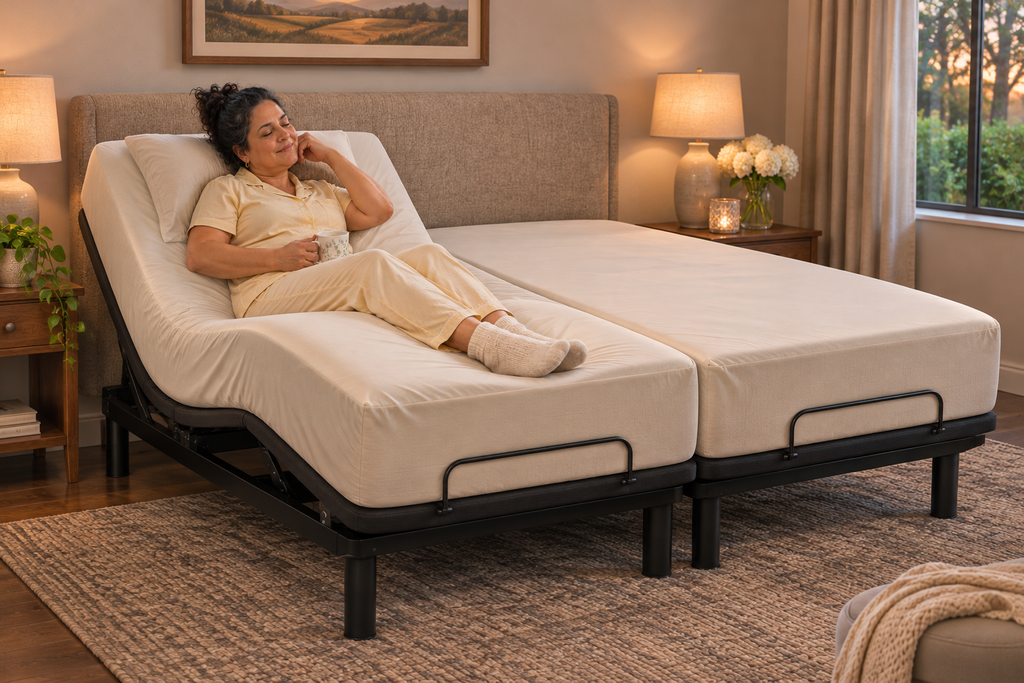
1. Adjustable bed base
This lets you raise your head, your legs or both with a remote. Lifting your legs can take pressure off your lower back. Raising your head can help if you have reflux or trouble breathing lying flat. It also makes getting in and out of bed easier on bad days. Many fit under the mattress you already have.
2. Supportive mattress
An old or too-firm mattress can push on sore spots like hips and shoulders. Many people with chronic pain like a medium-firm memory foam or hybrid mattress that lets the body sink in a little while still holding the spine straight. Look for one with a long at-home trial so you can return it if it doesn’t help.

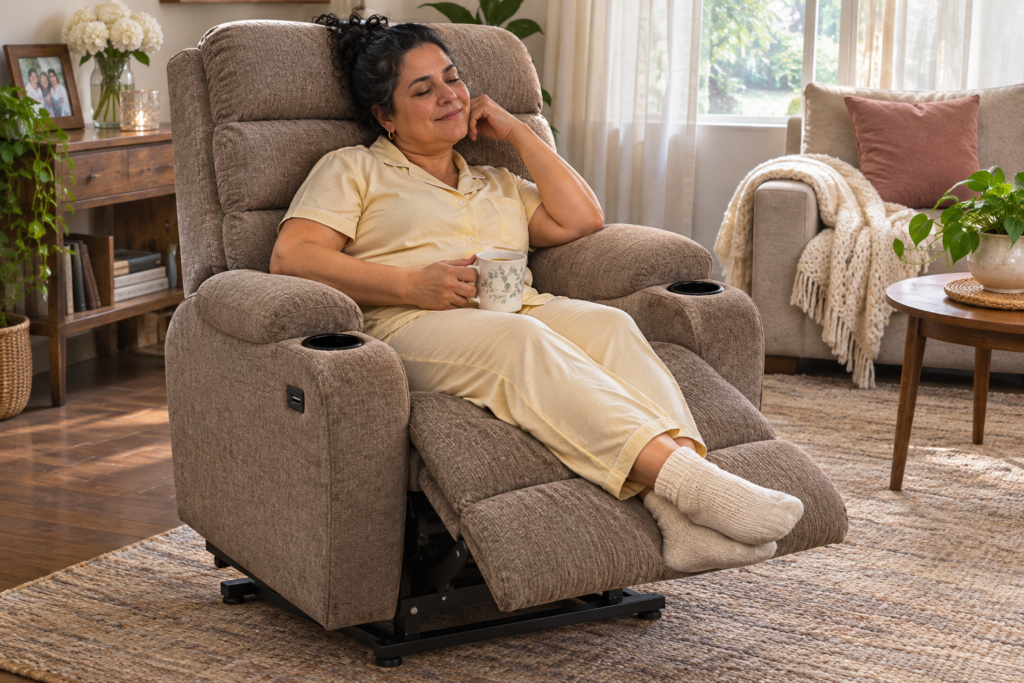
3. Lift recliner chair
Some nights the bed just isn’t comfortable, and a lot of people end up sleeping in a recliner. A lift recliner gently tilts forward to help you stand up, which helps if you have joint pain, weakness or balance issues. It’s a good fit for aging parents too.
Tip: Ask your doctor or physical therapist which option makes sense for your condition before you buy.
Final Thoughts
Better sleep won’t fix everything, but it can make the pain a little easier to carry. Start small, be patient with yourself, and talk to your doctor if you’re still not sleeping well. Sometimes there’s another sleep problem going on, like sleep apnea or restless legs, that can be treated.
This is for informational purposes only. For medical advice or diagnosis, consult a professional.
Sources
- Relationship Between Sleep Disturbances and Chronic Pain: A Narrative Review, Clinics and Practice, 2024
- The role of sleep in pain and fibromyalgia, Nature Reviews Rheumatology, 2015